
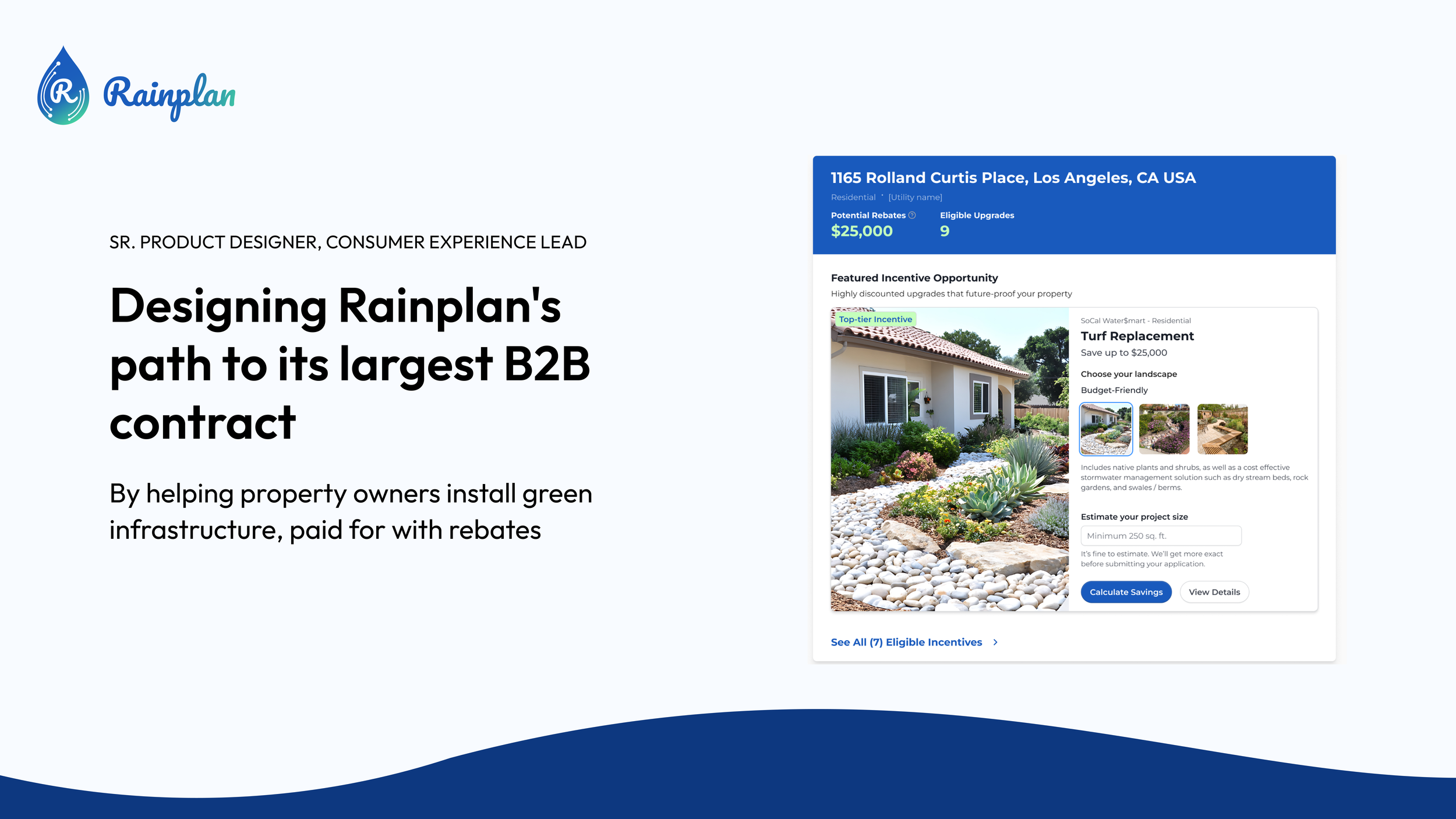
Context
Rainplan needed Metropolitan Water District of Southern California (MWDSC) as a B2B customer. MWDSC is SoCal's largest water wholesaler and was sitting on tens of millions of dollars in unspent turf rebates — money earmarked to pay homeowners to replace lawns with water-wise landscaping, but stuck in a program that wasn't moving it.
They wouldn't sign until we proved we could solve what their own program couldn't: reach property owners and carry them through to completed, rebate-approved projects (most homeowners abandoned mid-process, lost in municipal rule variance and contractor sourcing).
My job was to design the consumer experience that would become that proof point. The contract — and the broader thesis that Rainplan could serve as a private-sector layer on top of public stormwater programs — depended on it.
I partnered with a PM on prioritization and one engineer on implementation; research, flow design, and the final UI decisions were mine.
Research
I went into research with one question: where, exactly, do motivated homeowners drop off, and why?
I analyzed 60 sales call recordings, audited rebate program rules across MWDSC's member municipalities, and mapped the contractor landscape across the service area. Four findings reframed the design:
Our language was filtering for the wrong users. A meaningful share of inbound leads wanted to replace lawns with artificial turf, which the rebate explicitly disallows. We were spending sales cycles on people who'd never qualify. Shifting messaging from "turf removal" to "turf replacement" both filtered out unqualified leads upfront and reframed the project as an upgrade rather than a teardown — a better story for the homeowners we did want.
The water bill was a better hook than the rebate. We'd built the value prop around the one-time rebate payout. But homeowners on calls kept returning to ongoing utility costs — a recurring monthly win mattered more to them than a lump sum. This changed how we structured both the value proposition and the cost calculator.
Homeowners couldn't answer "is it worth it?" They couldn't visualize what their yard would become, couldn't price the replacement, and therefore couldn't tell whether the rebate covered enough of the cost to commit. The decision was paralyzed at the imagination layer, not the paperwork layer.
The real bottleneck was supply, not demand. SoCal had a severe shortage of landscape contractors willing to navigate municipal rebate paperwork. Even motivated, fully qualified homeowners stalled out waiting for a quote. Any consumer flow we built would die at the contractor handoff unless we redesigned that side too.
That last finding was the one that changed everything. The problem I'd been handed was framed as a consumer conversion problem. It was actually a two-sided marketplace problem.
Strategic Options
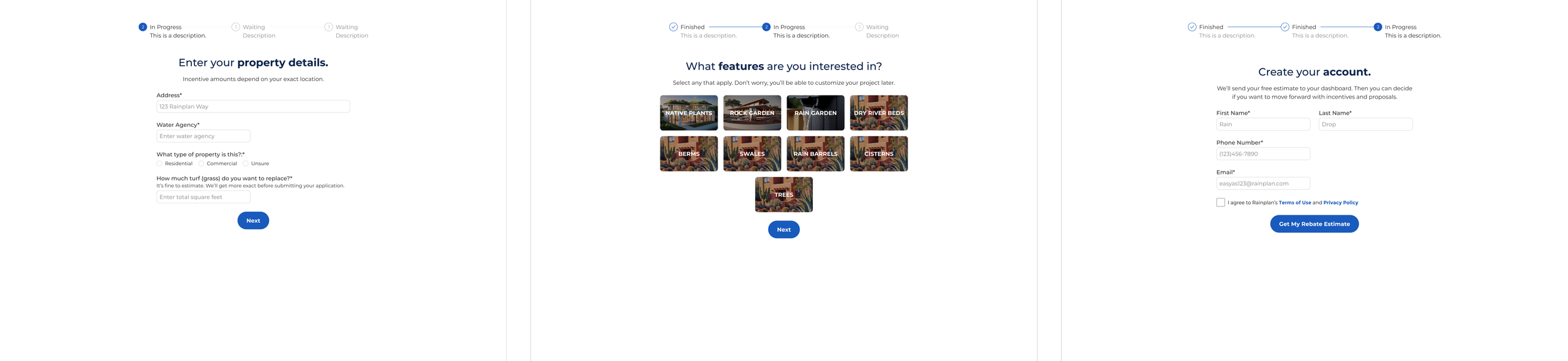
A quiz-style checkout. Stakeholders worried that a multi-step quiz to configure each project would deter users from committing.
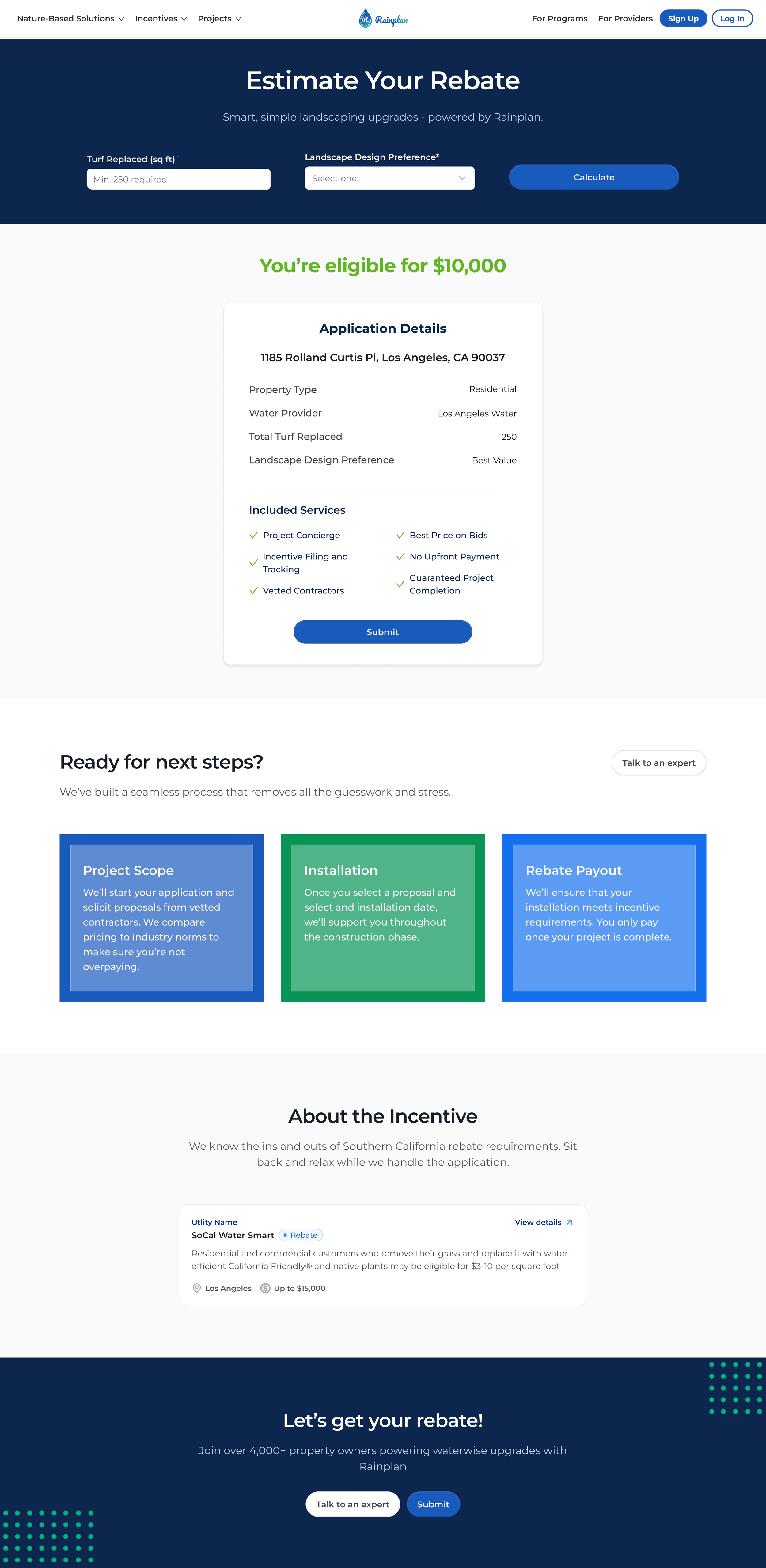
A rebate calculator. Fast to build, cheap to ship. But research had already shown that knowing the rebate amount wasn't the blocker — not knowing the project cost was. A calculator would have answered the wrong question.
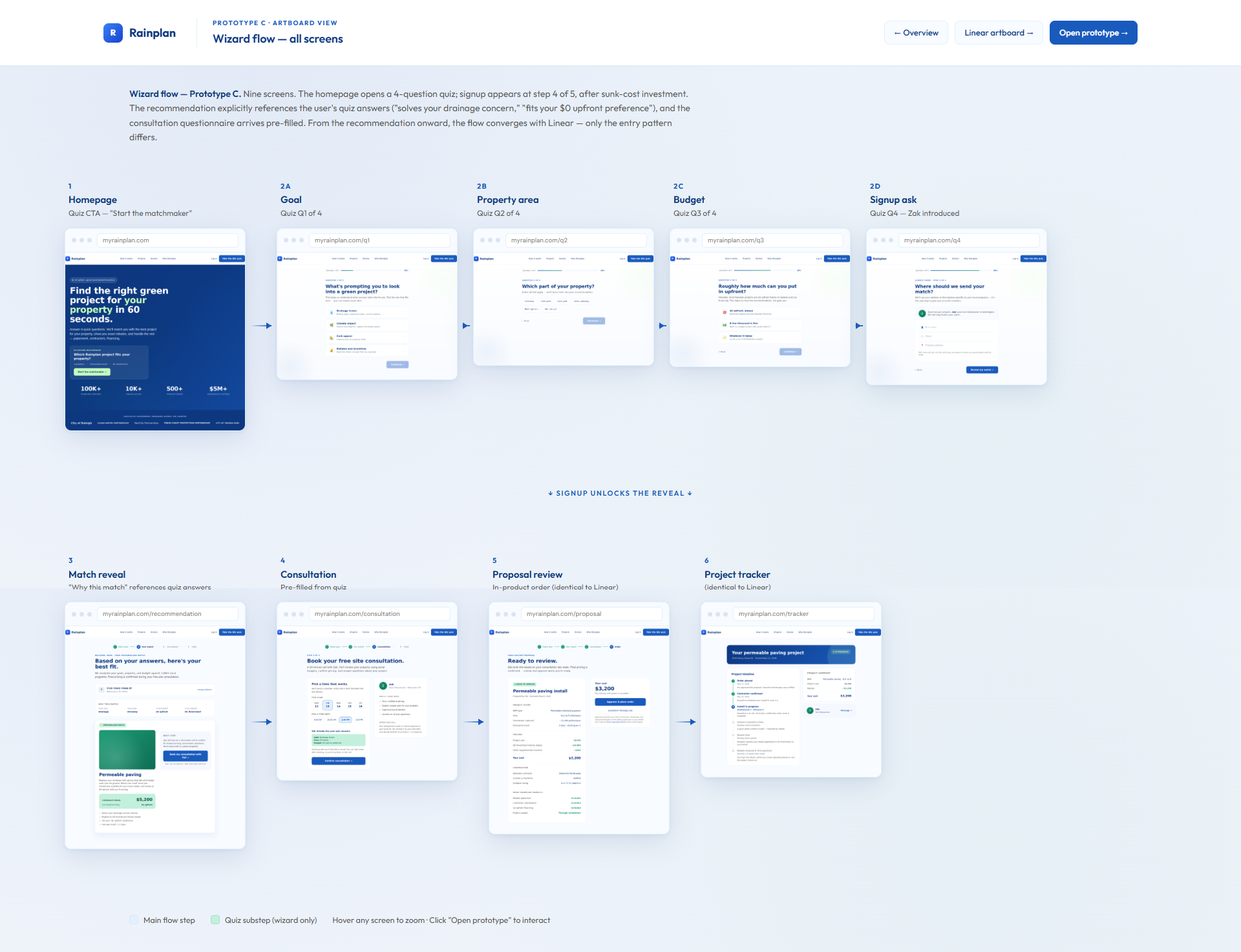
A guided step-by-step flow. The most expensive to build. The only option that could carry users from interest all the way to a completed, contractor-installed, rebate-approved project — which was the exact metric MWDSC needed to see.
Pivotal Decision
I reframed the question: what if homeowners didn't have to specify their design at all?
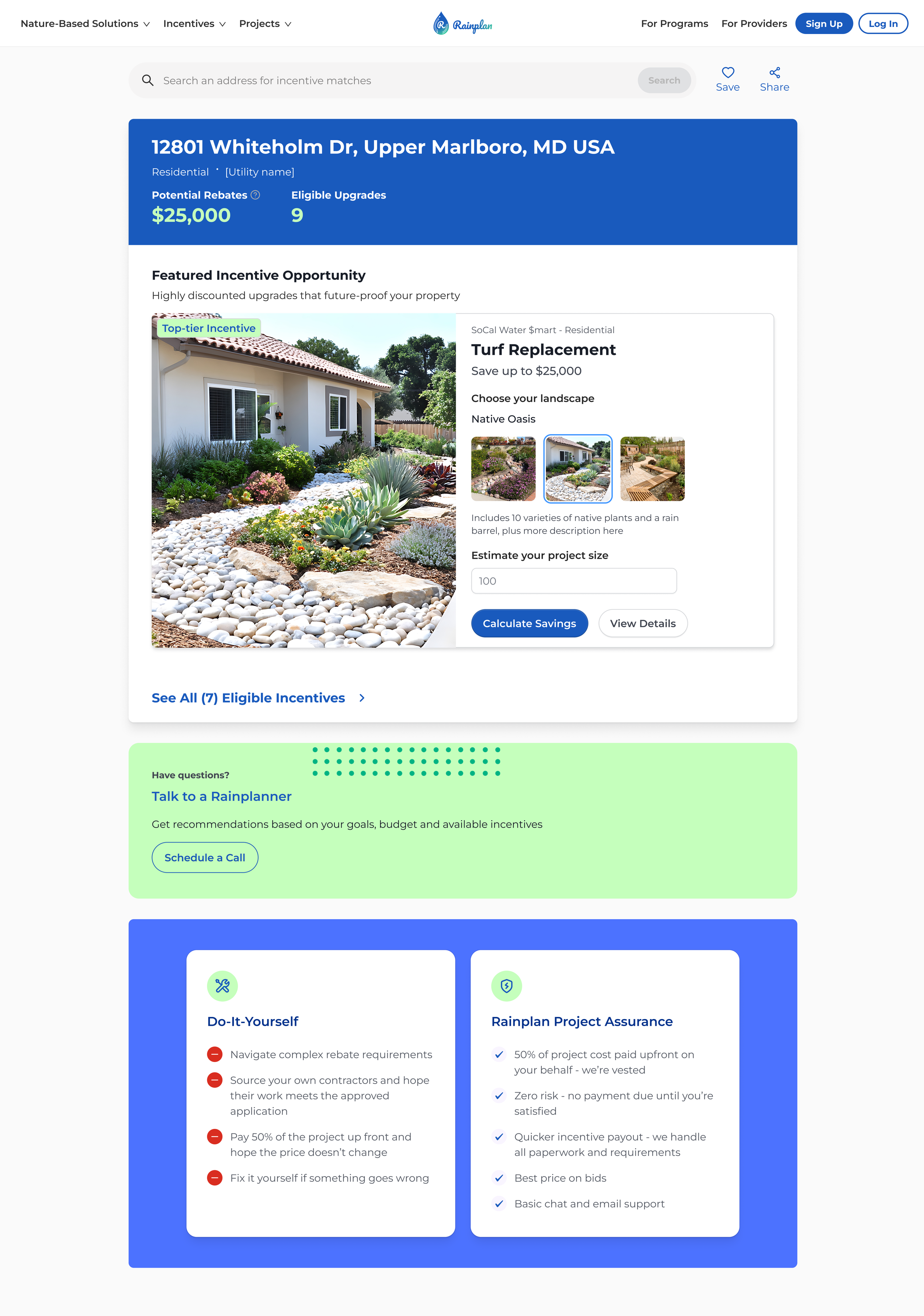
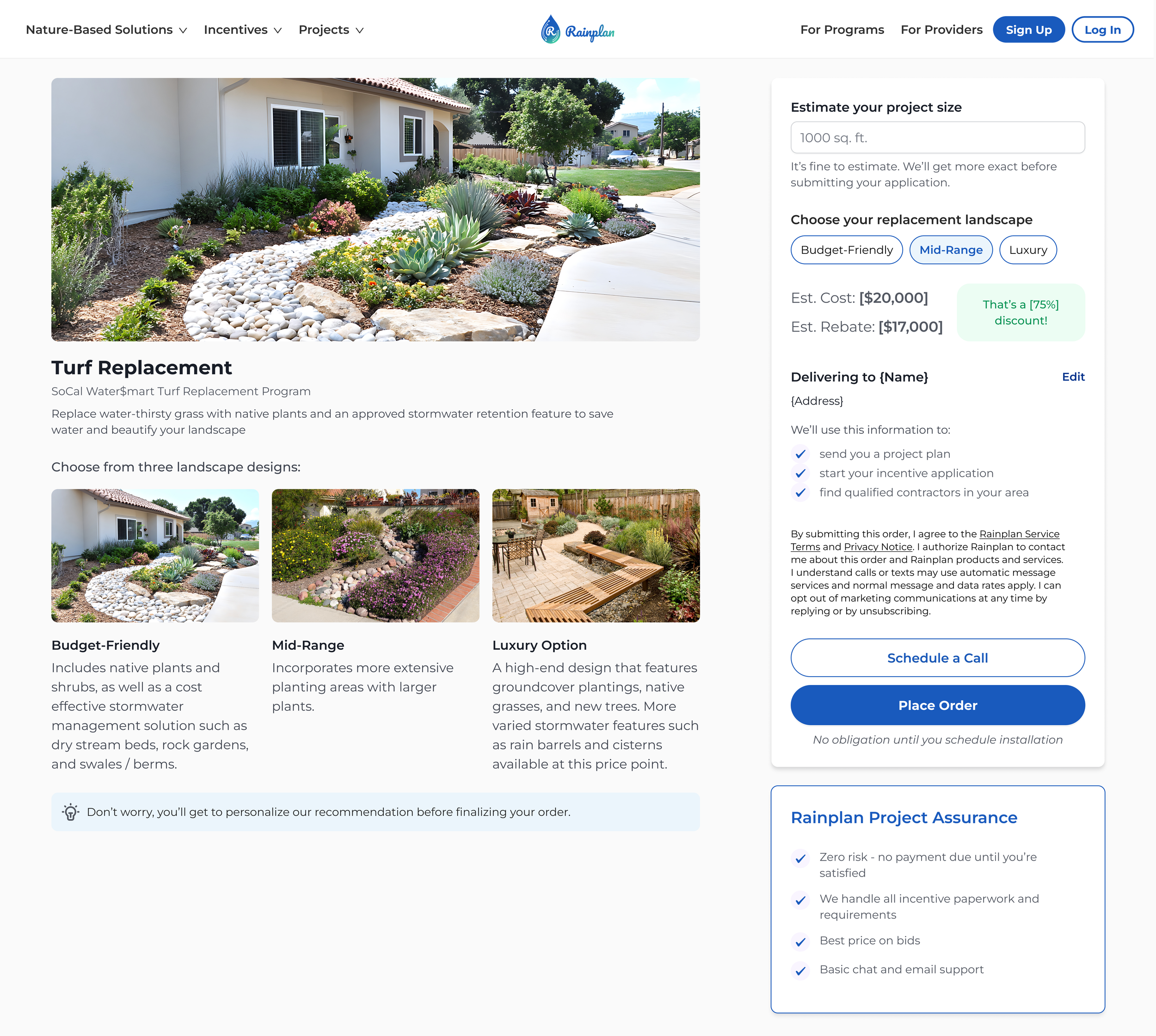
We replaced bespoke project configuration with three packages (Low-Cost, Best Value, Luxury) each mapped to standardized plant and material kits.
This was the highest-leverage decision of the project because it solved four problems in one move:
Homeowners didn't have to know what they wanted, which research had shown they couldn't articulate anyway. We could generate accurate cost estimates without bespoke design work. We could take packaged orders to contractors in bulk, directly attacking the supply shortage that was killing conversion. And the better contractor economics — predictable jobs, repeatable installs — translated into better margins for the MWDSC business case itself.
Constraints and tradeoffs
Breadth vs. credibility. Tiered packages meant homeowners with specific feature requests would be poorly served or excluded outright. Founders pushed to add a fourth "custom" tier to avoid losing those leads — I argued against it: a custom path would have reintroduced the exact bespoke-configuration problem that was killing conversion and contractor throughput in the first place. We compromised by routing unserved leads to a sales-assisted flow via “Schedule a Call” or “Talk to a Rainplanner” features.
Outcome
In the first month after launch, more than 50 homeowners signed contracts to complete stormwater retrofit projects using MWDSC rebates, or 10x average monthly contracts signed across all programs prior to this redesign. The consumer experience became the proof point that closed Rainplan's largest B2B contract to date and validated that a private-sector product layer could move public conservation dollars that municipal programs alone couldn't.